Few modern scholars have impacted biblical studies like Dr. Michael S. Heiser. A linguist and theologian specialising in the Hebrew Bible and Ancient Near Eastern studies, Heiser devoted his career to helping readers see the Bible through the eyes of its original authors and audience. His core message was simple: the Bible is a supernatural book that must be read in its ancient context. I’ve been studying his work recently, as well as listening to some of his talks and have found them immensely beneficial. Some love his writings, others don’t, but what’s new there? Heiser stands shoulder to shoulder with other key prominent biblical scholars like Tim Mackie (of the Bible Project), Ben Witherington III, NT Wright and others on the issues he speaks about. A veritable crowd of competent scholars.
Heiser says, categorically, that he is saying nothing new. He is simply connecting various datapoints already in the Hebrew Scriptures, doing proper biblical research into the surrounding cultures contemporary to the biblical narrative too, and drawing his conclusions.
Here are a few of the things that his work has highlighted for me:
1. The Divine Council: God’s Heavenly Family
At the heart of Heiser’s teaching is the Divine Council—a concept drawn from passages like Psalm 82, Job 1–2, and Deuteronomy 32:8–9 and many others. Heiser argued that the Bible presents God (Yahweh) as ruling over a heavenly assembly of divine beings—elohim—who participate in the administration of creation. We’re so used to associating the set of qualities that we use to describe God to the word elohim, but in essence, the Bible uses this word to refer to other spiritual beings, the spirits of dead humans, and more. It is a general category that covers what we might call angels, demons or small ‘g’ gods, etc. These beings are not equal to God at all, but they are real entities who serve in His heavenly court. Many remain faithful to God, but others were part of the spiritual rebellions through scripture and become part of what Paul describes in Ephesians 6 as the ‘principalities and powers.’ This idea doesn’t contradict monotheism; instead, it clarifies it. Yahweh is unique, the Most High God, but He chooses to govern through a family of spiritual beings, just as He works through humans on earth.
2. Reading Scripture with Ancient Eyes
The Bible wasn’t written in 21st century Scotland by 21st Century Scots! Surprise! It was written by people quite detached from our day, and an understanding of their views of the world is necessary to understand what they were writing about. In his landmark book The Unseen Realm, Heiser encouraged readers to strip away modern assumptions and recover the ancient worldview of Israel. He reminded readers that the biblical writers lived in a world filled with supernatural realities—angels, demons, spirits, and gods of the nations. Understanding that worldview helps unlock difficult passages and makes sense of the Bible’s spiritual warfare imagery. Lightbulbs flash on when you see the conquest of Canaan, and even the great commission and the current trajectory through this lens that Jesus, Paul, Peter and others would well have been immersed in. To Heiser, the supernatural worldview isn’t a metaphor or myth—it’s part of the inspired message of Scripture.
3. The Deuteronomy 32 Worldview
Another key insight from Heiser’s research is what he called the Deuteronomy 32 worldview. Based on Deuteronomy 32:8–9, he argued that after the Tower of Babel incident, God divided the nations and placed them under the authority of lesser divine beings, while He chose Israel as His own portion.
This cosmic division explains why the Bible portrays the nations as being under the influence of hostile powers (Daniel 10, Psalm 82). The story of redemption, then, is not only about human salvation—it’s about God reclaiming the nations from rebellious divine beings, whose ultimate destiny is destruction.
4. The Image of God and Human Purpose
Heiser also reframed the meaning of being made in the image of God (Genesis 1:26–27). Rather than referring to physical likeness or specific traits, He taught that “image” means status and function: humans are God’s representatives on earth, His imagers. Just as the divine council administers God’s will in the spiritual realm, humans were created to extend His rule and presence on earth. This makes every person sacred and every vocation potentially divine service.
5. Jesus and the Reversal of Babel
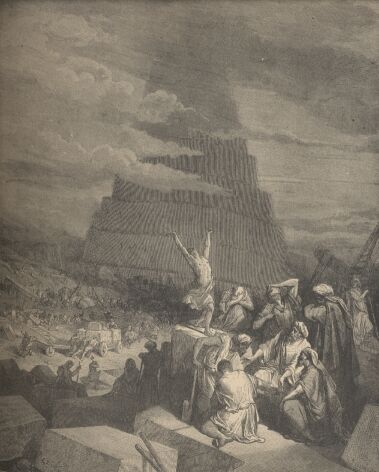
For Heiser, the New Testament is the climax of the cosmic story introduced in the Old Testament.
Through Jesus, God begins to reverse the rebellion of the nations. The coming of the Holy Spirit at Pentecost (Acts 2), with its multilingual miracle, symbolised the reversal of Babel. The gospel spreads to all nations, reclaiming humanity and creation from spiritual darkness.
6. Taking the Bible Seriously—Not Literally in a Flat Way
Heiser frequently warned against both skeptical reductionism and superficial literalism.
He urged readers to “take the Bible seriously, but not always literally,” emphasising literary and cultural context. Scripture was written for us but not to us, meaning we must understand what it meant to its original audience before applying it today.
Dr. Michael Heiser passed away in 2023, but his influence continues through his books (The Unseen Realm, Supernatural, Angels, Demons), his podcast (The Naked Bible Podcast), his bible college AWKNG, and his nonprofit work.
His enduring challenge to readers is this:
“If it’s weird, it’s important.”
Heiser believed that the “weird” parts of Scripture—the ones modern readers often skip—are keys to understanding the Bible’s deepest truths. Dr. Michael Heiser’s scholarship invites us to rediscover the Bible as its ancient authors intended: a story of divine conflict, cosmic redemption, and the restoration of God’s family—both in heaven and on earth. By embracing the supernatural worldview of Scripture, we gain a richer appreciation of the gospel’s cosmic scope and the profound role humans play as those bearing God’s image in the world.
It’s worth grabbing his books. Note, The Unseen Realm is lengthy and more academic (but still a very worthwhile read!) but he wrote a book entitled ‘Supernatural’, which is an accessible version of his work for everyday readers like you and me!
 Andrew S M Clark